Drywall Sizes: Which Sheet Size Should You Buy?

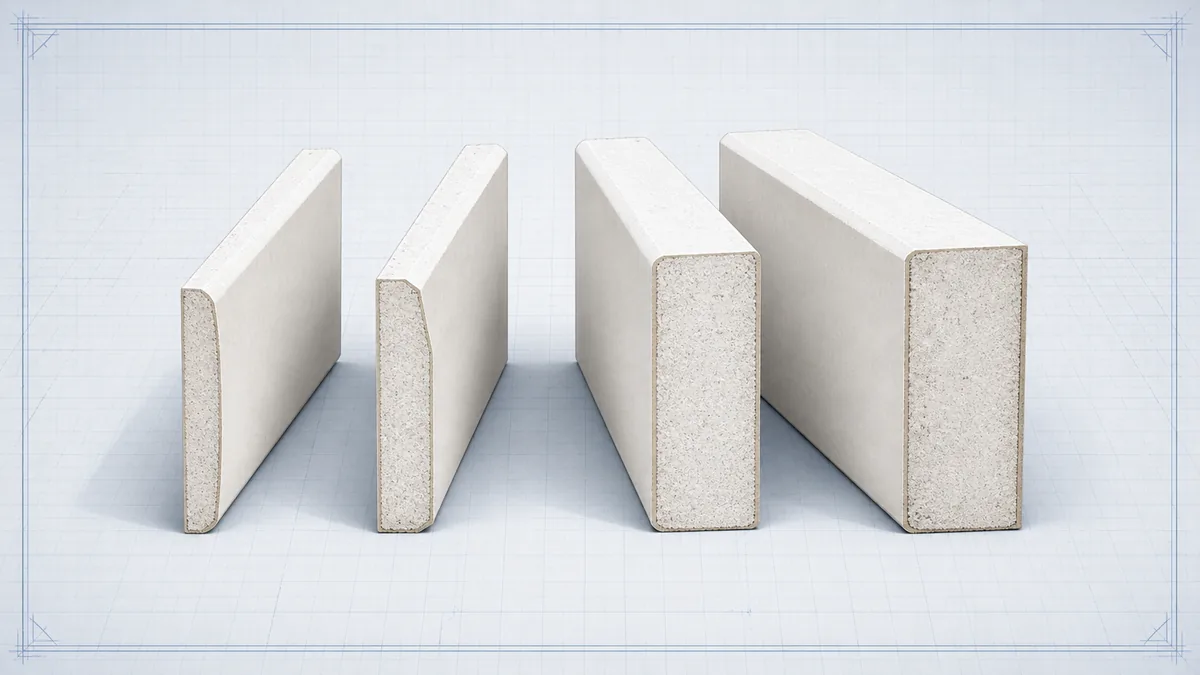
Drywall comes 4 ft wide in every thickness, and 1/2 in and 5/8 in board are also made 54 in wide. Lengths run from 6 ft (National Gypsum regular board) or 8 ft (USG) up to 16 ft, depending on the board and the maker. A 4x8 sheet is the most common size, but the best size for a room is the longest sheet that covers each wall with the fewest butt joints and still fits through the door. The chart below lists what USG and National Gypsum (Gold Bond) publish for each thickness, then the square feet and weight of each sheet.
Drywall Calculator
Full pageYour estimate
4' x 8' sheets · 10% waste allowance4' x 8' drywall
Area
Materials
Sheets include a 10% allowance; compound and tape follow the board hung, with standard deductions of 21 sq ft per door, 15 sq ft per window and 112 sq ft per garage door. The sheet count comes from laying the board out wall by wall, plus 10% as spare sheets.
Drywall sizes chart by thickness
These are the standard widths and lengths on each manufacturer's data sheet. The USG entries are Sheetrock sizes, since Sheetrock is USG's brand, and the National Gypsum entries are Gold Bond. Both makers note that other sizes can be special ordered, and a supplier may stock only some of these, so call ahead for anything longer than 12 ft or wider than 48 in.
- 1/4 in: 48 in wide. USG lists 8 to 14 ft lengths, and National Gypsum lists its regular board at 6 to 16 ft. Neither lists a 54 in width.
- 3/8 in: 48 in wide, in the same lengths as 1/4 in: 8 to 14 ft from USG, 6 to 16 ft from National Gypsum.
- 1/2 in regular: 48 in wide, 8 to 14 ft from USG and 6 to 16 ft from National Gypsum. Both also list a 54 in width without giving its lengths.
- 1/2 in lightweight: USG UltraLight is 48 or 54 in wide and 8 to 16 ft long. Gold Bond High Strength LITE is 8 to 14 ft at 48 in and 12 to 14 ft at 54 in.
- 5/8 in type X: USG Firecode X is 8 to 16 ft long at 48 in, and 12 ft long at 54 in. Gold Bond Fire-Shield runs 6 to 16 ft at 48 in and is also made 54 in wide.
- 5/8 in lightweight type X: USG UltraLight Firecode X is 48 or 54 in wide and 8 to 16 ft long. Gold Bond High Strength Fire-Shield LITE is 48 or 54 in wide and 8 to 12 ft long.
Which thickness you need depends on the job: framing spacing, ceilings, fire ratings and the code. That is what the thickness guide covers; this guide is about the sheet size.
Square feet and weight per sheet
Area is width times length, so every extra foot of a 48 in sheet adds 4 sq ft. Weight is that area times USG's published weight per square foot, which USG gives as approximate, for design and shipping.
- 4x8: 32 sq ft, about 51 lb in 1/2 in regular, 40 lb in 1/2 in lightweight, 70 lb in 5/8 in type X.
- 4x9: 36 sq ft, about 58 lb in 1/2 in regular, 45 lb in 1/2 in lightweight, 79 lb in 5/8 in type X.
- 4x10: 40 sq ft, about 64 lb in 1/2 in regular, 50 lb in 1/2 in lightweight, 88 lb in 5/8 in type X.
- 4x12: 48 sq ft, about 77 lb in 1/2 in regular, 60 lb in 1/2 in lightweight, 106 lb in 5/8 in type X.
- 4x14: 56 sq ft, about 90 lb in 1/2 in regular, 70 lb in 1/2 in lightweight, 123 lb in 5/8 in type X.
- 4x16: 64 sq ft, about 102 lb in 1/2 in regular, 80 lb in 1/2 in lightweight, 141 lb in 5/8 in type X.
- 54 in x 12 ft: 54 sq ft, about 68 lb in 1/2 in lightweight, 119 lb in 5/8 in type X.
To turn a room into sheets, total the square feet of the walls and ceiling and divide by the area of the size you plan to buy, then add waste. The square footage calculator does this for each of these sizes.
What is the standard size of drywall?
Home Depot's drywall guide calls 4x8 the most common size, and other sizes are often special order. It is not the shortest standard sheet, though. Every thickness is made 48 in wide, and standard lengths start at 8 ft on USG's data sheets and at 6 ft for National Gypsum's regular board.
Standard does not mean best. Longer sheets cost more each but cover more wall per joint, and on a wall longer than 8 ft they remove butt joints, the square-cut ends that have no taper and take the most finishing.
What size drywall for walls?
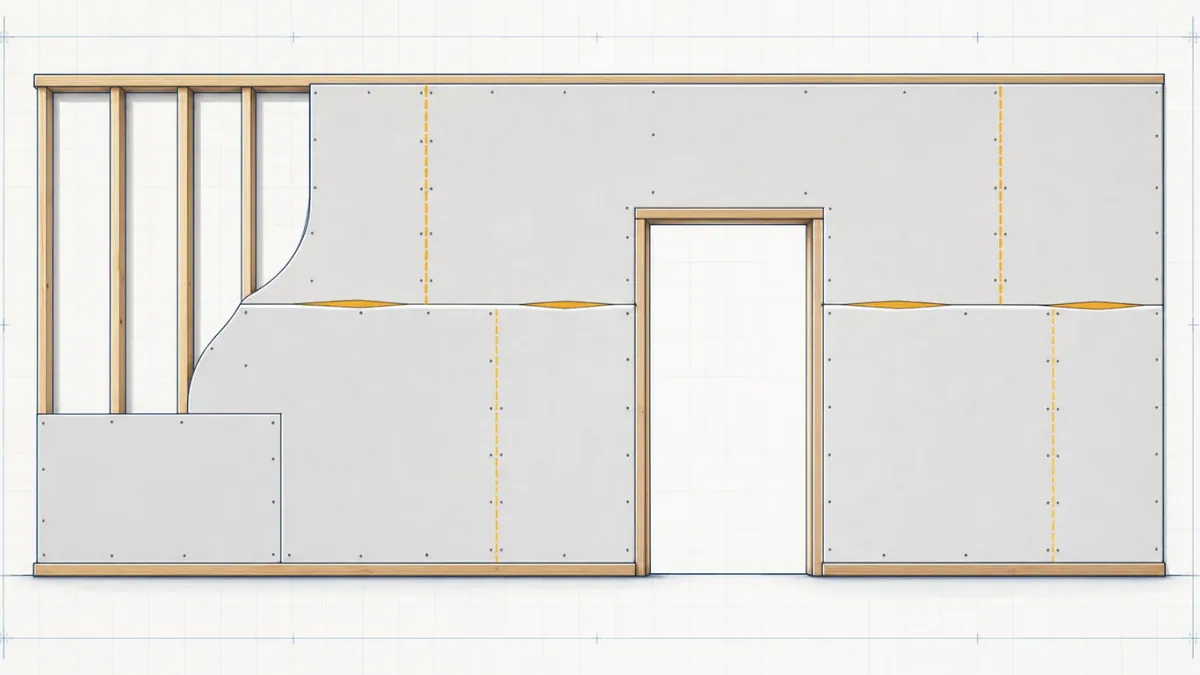
Use the longest sheet you can get in. National Gypsum's installation recommendations, which follow ASTM C840 and GA-216, say to use boards of maximum practical length so that the minimum number of end joints occur. Wall height then decides between 48 in and 54 in board. These examples are a plain 12 ft wall run through the layout engine behind the sheet size picker on this page:
- 8 ft walls: 4x12 sheets hung horizontally take 2 sheets, 12 ft of seam and no butt joints. The same wall in 4x8 across takes 3 sheets, 20 ft of seam and 2 butt joints.
- 9 ft walls: two rows of 54 in board make exactly 9 ft, so 54 in x 12 ft takes 2 sheets, 12 ft of seam and no butt joints. 48 in x 12 ft needs a ripped 12 in strip row and takes 3 sheets, 24 ft of seam and no butt joints; 4x9 stood on end takes 3 sheets, 18 ft of seam and no butt joints.
- 10 ft walls: 4x10 stood on end takes 3 sheets, 20 ft of seam and no butt joints. 54 in x 12 ft across still needs a strip row and takes 3 sheets, 24 ft of seam and no butt joints.
The 9 ft wall calculator and the 10 ft wall calculator compare these options for a whole room with doors and windows, and the layout planner draws every sheet.
What size drywall for ceilings?
The same rule applies overhead, with one more: National Gypsum says to hang the ceiling first, with the board at right angles to the framing. Pick the sheet length that spans the room in that direction with no butt joint if you can.
Take a 12 by 14 ft ceiling. If the joists span the 12 ft way, 4x14 sheets cross them in one piece: 3 sheets, 28 ft of seam and no butt joints. If the joists span the 14 ft way, 4x12 sheets cross them instead: 4 sheets, 36 ft of seam and no butt joints.
Weight matters more over your head. A 4x12 sheet of 1/2 in regular board is about 77 lb against about 60 lb for 1/2 in lightweight, and USG and Gold Bond both describe their lightweight 1/2 in panels as sag resistant for ceilings. Ceiling thickness by joist spacing is in the thickness guide.
Will it fit? Stairwells, doors and pickups
Before ordering anything longer than 8 ft, measure the route. A sheet carried on edge is 48 in tall, or 54 in for wide board, and as long as its length, so it has to clear the tightest doorway, hall corner and stair landing on the way in. If a 12 ft sheet cannot make the turn at the top of the stairs, set the longest sheet in the sheet size picker to what does fit and it picks the best layout from the shorter sizes.
For a pickup, a 4x8 sheet lies flat only in a bed at least 96 in long and 48 in wide between the wheel wells, so measure yours. A longer sheet overhangs the tailgate by the difference. Weight adds up fast: ten sheets of 1/2 in regular 4x8 come to about 512 lb, so check that against your truck's payload rating.
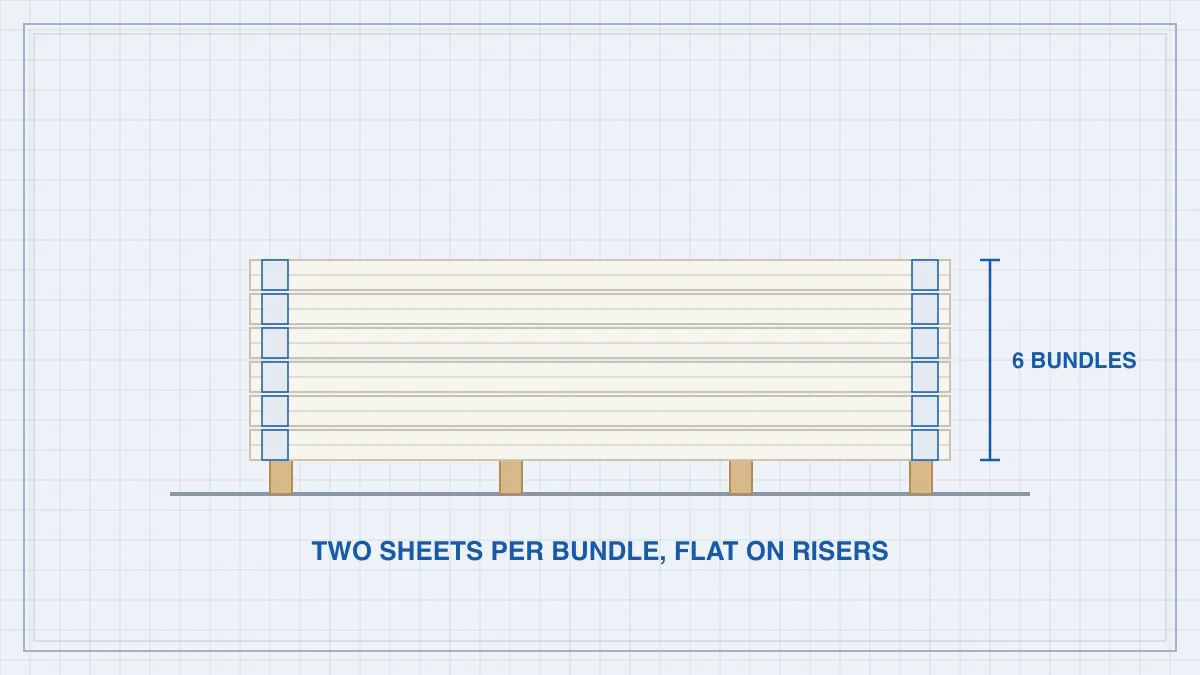
For a whole house the board usually comes on a delivery truck instead; the guide to bundles and pallets covers how delivery and stocking work.
Best sheet for this wall
Fewest butt joints, then the least boardNext best sizes
- 54 in x 14 ft, hung horizontally2 sheets, 14 ft of seam, 0 butt joints
- 48 in x 16 ft, hung horizontally2 sheets, 14 ft of seam, 0 butt joints
- 48 in x 8 ft, stood on end4 sheets, 24 ft of seam, 0 butt joints
A plain wall with no openings, laid out by the same engine as the layout planner, with ripped strips and offcuts reused. Seams are the flat joints where two pieces meet; corners are extra. Lengths are those listed on USG and National Gypsum data sheets, so check what your supplier stocks.
Drywall Square Footage Calculator
Turn your wall and ceiling measurements into square feet and a sheet count for any of these sizes.
Frequently asked questions
What sizes does drywall come in?
Is 4x8 the standard size for drywall?
Can you buy drywall in 16 foot lengths?
Is 54 inch drywall hard to find?
What length drywall is best for a ceiling?
Will drywall fit in the bed of a pickup truck?
Primary references
USG and National Gypsum submittals give the widths, lengths and thicknesses each board is made in, and The Home Depot confirms 4x8 as the most common size.
- Sheetrock Brand Gypsum Panels, Regular and Firecode Cores submittal, sizes and weights (WB1473)USG
- Sheetrock Brand UltraLight Panels submittal, lengths, widths and weight (WB2501)USG
- Sheetrock Brand Firecode X Panels submittal, lengths and widths (WB2964)USG
- Sheetrock Brand UltraLight Panels Firecode X submittal, lengths and widths (WB2598)USG
- Gold Bond High Strength LITE family of products, physical properties (111180)National Gypsum
- Gold Bond High Strength LITE Gypsum Board technical information, installation recommendationsNational Gypsum
- Gypsum Construction Guide, Gold Bond gypsum board products, thicknesses, widths and lengthsNational Gypsum
- Types of Drywall, last updated May 7, 2026 (4 x 8 ft as the most common size)The Home Depot